Family & estate
What to Do With a Parent's Belongings When Siblings Disagree
Short answer: inventory everything first, agree on a fair selection process before anyone starts taking things, and put decisions in writing as you go. Most sibling conflict over a parent's belongings comes from an unstructured process, not from genuine disagreement about what's fair — a clear method removes most of the friction before it starts.
Published August 21, 2026 · Heritage Property Transitions
Why This Gets Hard
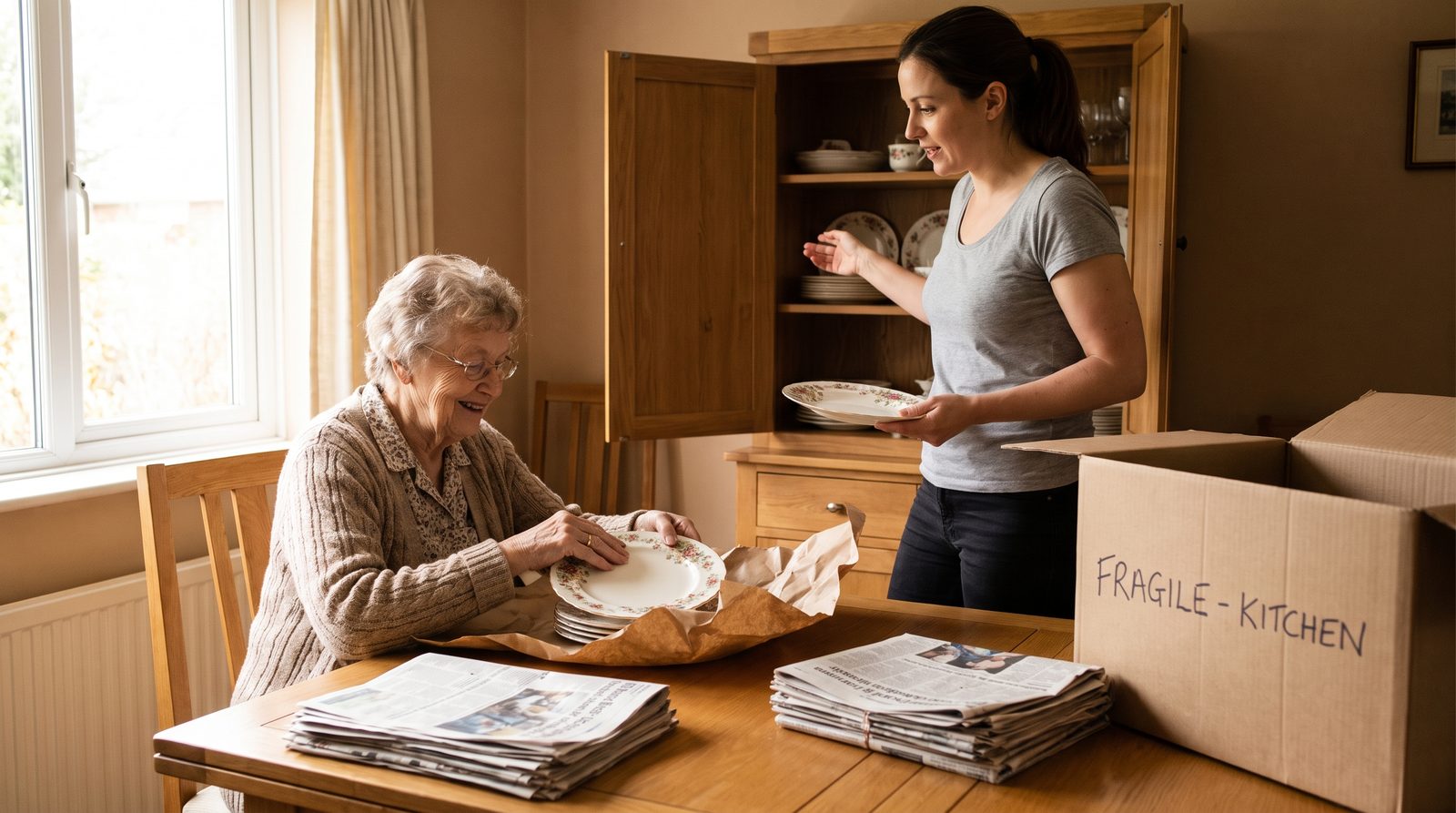
Dividing a parent's belongings rarely starts as a fight over money — it's usually about meaning. A chipped mixing bowl or a worn recliner can carry more weight than anything with real resale value, and when siblings are grieving at different paces, in different life stages, or living at different distances from the house, small disagreements about objects can stand in for larger, harder conversations. None of that makes the disagreement less real. It does mean the fix is usually a better process, not a better argument.
Step 1: Inventory Before Anyone Takes Anything
Walk the house together — or over video call if siblings live apart — and make a room-by-room list before a single item leaves the property. Photograph anything with sentimental or possible resale value. This single step prevents the most common source of resentment: one sibling arriving early and taking things before anyone else has seen the full picture of what's there.
Step 2: Agree on a Selection Method Before Selecting
Pick a method everyone agrees to before anyone picks an item, not after someone's already claimed the good chair. Two methods work well for most families:
- Rotating pick: siblings take turns choosing one item at a time, in an order set by lottery, birth order, or whatever the family agrees feels fair. Simple, transparent, and easy for everyone to track.
- Point or bid system: each sibling gets an equal pool of points to allocate across the items they want most, so someone who deeply wants one specific piece can put more weight behind it instead of hoping to win it in a random draw.
Either method works — what matters is agreeing on one before the process starts, so no one feels like the rules changed mid-way through.
Step 3: Set a Clear Path for Disputed High-Value Items
A small number of items — usually the ones with real financial or deep sentimental value — will need their own process. For anything requiring a professional opinion before it's divided, sold, or discarded (jewelry, firearms, fine art, antiques, collections), see the appraise-first list in our Estate Cleanout Checklist. For everything else that's genuinely contested, agree in advance on a tiebreaker — a coin flip, a rotating "first refusal" that resets each round, or simply selling the item and splitting the proceeds when no single resolution feels fair to everyone.
Step 4: Document Decisions in Writing
A simple shared spreadsheet or even a group text thread that records who took what and when prevents the "I thought we agreed" conversations that show up months later. This matters even more when an executor is formally responsible for the estate — documentation protects them as much as it protects sibling relationships.
When a Neutral Third Party Helps
Sometimes the disagreement isn't really about the process — it's about who has to do the physical work of sorting, hauling, and clearing everything that isn't claimed. When one sibling ends up doing all the lifting (literally and figuratively) while others weigh in from a distance, resentment builds regardless of how fair the selection method was. Bringing in a neutral local provider to handle the logistics — the sorting, the donation runs, the hauling of what nobody wants — takes that particular fight off the table entirely. Nobody has to feel like they're doing more than their share of the physical work, because the work itself is handled by someone outside the family.
That's exactly what a matched estate cleanout provider is built for — once the family has decided what's being kept, sold, or donated, the provider clears everything else, so the remaining conversation is about the belongings that matter, not about who has to carry the couch.
Use our free checklist to structure the sorting process room by room.
Get the Free Estate Cleanout ChecklistLet a Neutral Provider Handle the Logistics
Get matched with a vetted Greater St. Louis estate cleanout provider so the family can focus on what matters.
Get Matched With a Provider