House cleanout
House Cleanout Services in St. Louis: The Complete Process
Professional house cleanout services in St. Louis help families and executors clear a property of personal belongings. A vetted provider manages the sorting, hauling, and disposal or donation of contents, so the home is ready for closing, a sale, or a lease turnover.
Published September 1, 2026 · Heritage Property Transitions
Heritage Property Transitions is a referral and matching platform — we don't perform cleanouts ourselves and we don't set prices. The information below describes how the process typically works so you know what to expect; your matched provider will confirm the specifics and the quote for your property.
Understanding the Scope of House Cleanout Services in St. Louis
The term “house cleanout” can mean different things depending on the situation. The scale and complexity can vary significantly, from a single cluttered room to an entire property tied to a probate case. Understanding these distinctions helps set clear expectations with a provider before work begins.
Whole-House Cleanouts
A whole-house cleanout involves emptying the entire property of its contents. That includes everything in bedrooms, closets, the kitchen, basement, attic, garage, and any outbuildings. This is the most common scenario when preparing a house for sale after a parent has passed away or moved into assisted living. The goal is to remove all personal property, furniture, and accumulated items, leaving the home empty for the next step. A provider's crew works through the home systematically, separating items according to the family's instructions.
Single-Room or Partial Cleanouts
Sometimes only a specific area of a home needs to be cleared. A family might need help with a basement that has accumulated items over decades. Or an attic or garage needs to be emptied to improve the home's marketability. These partial cleanouts are smaller in scope but follow the same principles of sorting and removal, and they're often requested by homeowners who are downsizing or reclaiming space in their own home.
Estate Cleanouts and the Probate Process
An estate cleanout is a specific type of whole-house cleanout tied to the legal process of settling an estate. It often involves working under the direction of an executor or administrator and may need to align with a probate court timeline. The contents of the home are considered assets of the estate until legally distributed or disposed of, so it's important that the personal representative secures valuable items and documents before the broader cleanout begins. For the first steps after a loss, see what to do with a parent's house after losing them.
The Cleanout Sequence, Step by Step
A structured approach makes the enormous task of clearing a home more manageable. Every situation is a little different, but most cleanouts follow a predictable sequence.
- Secure the property. Locks are changed if needed and access is limited to authorized people. The family does an initial walkthrough to remove documents, cash, jewelry, and anything sentimental — this first pass belongs to the family, not the cleanout crew.
- Sort room by room. Working through the house one room at a time keeps the project from feeling overwhelming and makes sure nothing gets missed. Tagging a “keep” pile communicates decisions clearly to the crew.
- Decide keep, donate, sell, or haul for each category. A provider can coordinate donation pickups, arrange consignment or auction evaluations for items of value, and handle proper disposal of the rest.
- Final sweep. Once everything is out, the crew does a basic sweep — floors cleared, surfaces wiped down — so the property is ready for a showing, a closing walkthrough, or handover to a landlord.
It's common for disagreements to surface during the sorting step, especially among siblings dividing a lifetime of belongings. Our guide on what to do when siblings disagree about parents' belongings walks through how to handle that part of the process.
Our free checklist walks through every room and category so you're not building a plan from scratch.
Get the Free Estate Cleanout ChecklistWho Handles What: Family vs. Provider
A house cleanout goes more smoothly when the roles are clear from the start. The family's role centers on decisions and anything sentimental; the provider's role is the physical labor and logistics.
| Typically the family | Typically the provider |
|---|---|
| Locating and securing legal and financial documents | Removing furniture, appliances, and boxed items |
| Sorting photographs, letters, and keepsakes | Coordinating donation-center pickups |
| Deciding who gets which heirloom | Arranging consignment or auction transport for items of value |
| Making the final call on donate, sell, or discard | Hauling trash and unwanted items, and supplying labor, trucks, and equipment |
No provider can or should make the personal decisions — that job stays with the family. The crew a vetted estate cleanout provider sends starts once those decisions are made, taking the physical strain off the family.
What Actually Drives the Scope of a Cleanout
Not every house cleanout looks the same, and a few factors determine how much time, labor, and coordination a job takes. These are the same factors that shape a provider's quote, so it's worth understanding them before you talk to one.
- Volume and density of contents. A lightly furnished home is a simpler project than one with decades of accumulated belongings. Hoarding situations sit at the far end of this spectrum and often call for a specialized approach.
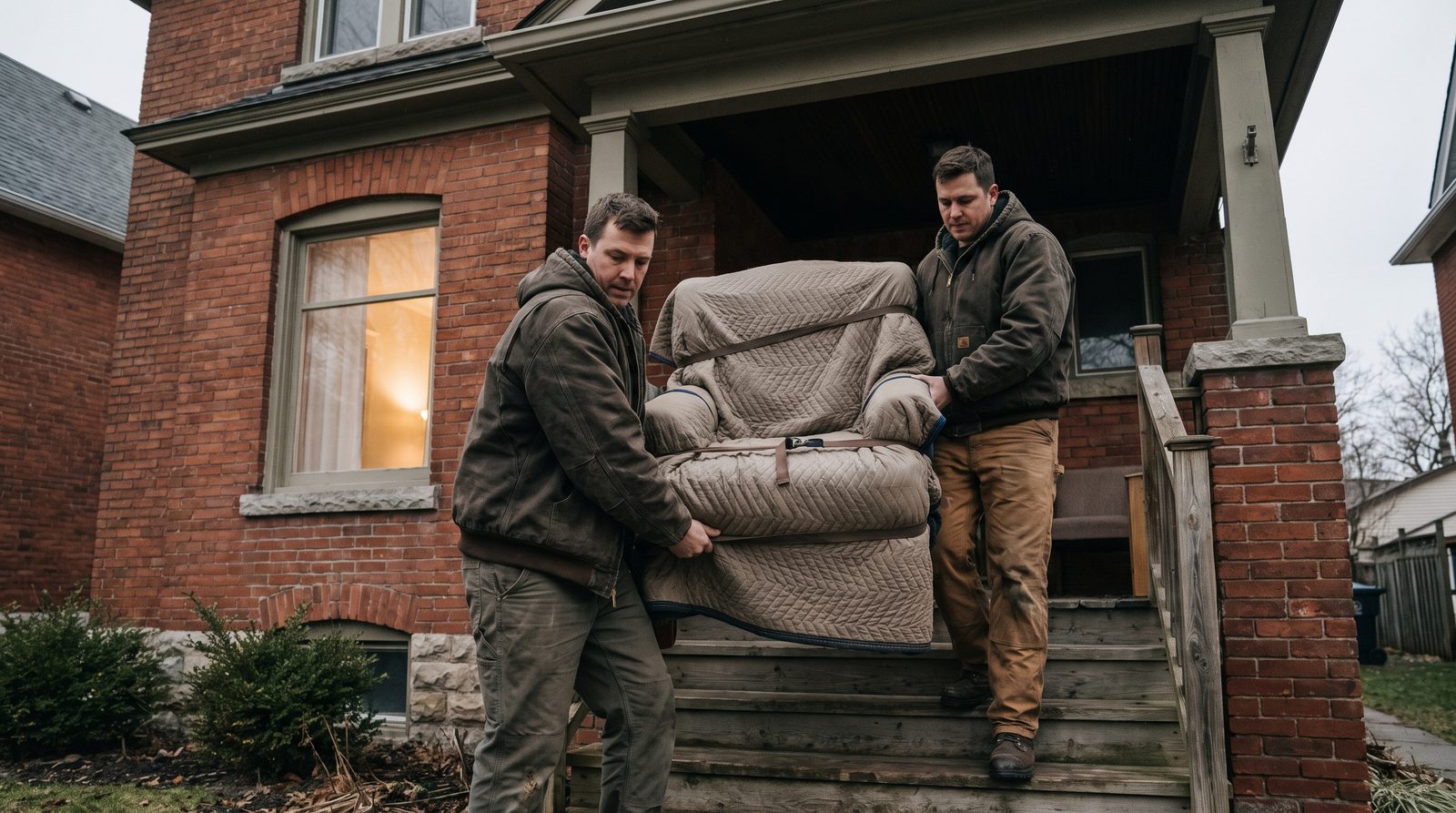
- Access. Stairs, narrow hallways, limited parking, and the distance from the door to the truck all add time and labor.
- Hazards. Structural issues, pests, or accumulated waste can complicate a cleanout and may call for specific protocols or equipment.
- Distance for an out-of-state executor. Coordinating access, decisions, and updates remotely takes more planning, and providers experienced with out-of-town clients can make that easier with video walkthroughs and regular check-ins.
We frame all of this as what changes the scope, not as a number — the only way to get an actual price is a quote from the provider after they've seen the property, in person or through photos. For a full breakdown of what shapes pricing, see how much estate cleanout costs in St. Louis.
How to Vet a Cleanout Provider
Selecting the right provider matters, because you're giving them access to a family home, not just hiring labor. Ask about insurance coverage, what's included in the quote, how disposal and recycling are handled, and the expected timeline. A professional provider should explain their process clearly and put the estimate in writing. For the full list of questions to ask before you hire, see how to hire an estate cleanout company.
Metro East Illinois vs. Missouri Logistics
Greater St. Louis spans two states, and the location of the property — not where the family lives — is what determines certain logistical and legal considerations. The physical work of a cleanout is the same on either side of the river, but probate rules and timelines differ between Missouri and Illinois, and that can affect when an executor has the authority to begin clearing a property. Confirm the specifics with your probate attorney; for background, see Illinois probate vs. Missouri probate and how long probate takes in Missouri. A provider familiar with the region will also know which local disposal or parking rules apply in a given municipality, whether the property sits in St. Louis County or Metro East.
Furniture that doesn't need to be hauled is often the easiest category to handle first — our St. Louis furniture donation and pickup guide covers where to donate and how much lead time to plan for.
Clearing a home is a significant undertaking, but it doesn't have to be a solitary one. Understanding the process, knowing who handles what, and choosing a vetted provider lets a family move through it with confidence. Whatever stage you're at, that's what our network of house cleanout services in St. Louis exists for.
Not sure what comes first after a death or a move? Answer five questions and get an ordered checklist for a Missouri or Illinois estate.
Use the Who Do I Call First? toolFrequently asked questions
How long does a typical house cleanout take?
The timeline varies widely based on the size of the home and the volume of its contents. A small apartment might be cleared in a single day, while a large, cluttered home can take a crew several days to a week. A matched provider will give you a specific time estimate after an on-site or photo-based assessment.
What happens to items that can't be donated or sold?
Items with no resale or donation value are hauled away for disposal. A provider handles this according to local regulations, which may involve a trip to a transfer station or landfill, and separates materials for recycling where possible.
Do I need to be present during the entire cleanout?
No. Most families are present at the start to give final instructions and again at the end for a walkthrough, but the crew can work independently in between. Providers are used to arranging access for out-of-state executors who cannot be on-site the whole time.
What is the difference between a house cleanout and junk removal?
A house cleanout is the broader process — sorting, deciding what's kept, donated, sold, or hauled, and coordinating each of those streams. Junk removal is typically the narrower, final step of hauling away items that have already been sorted and set aside.
Can a cleanout provider handle large or unusual items?
Most experienced providers can manage pianos, hot tubs, large appliances, and exercise equipment. Point out anything unusual during the initial walkthrough so it's included in the provider's scope of work and quote.
Does it matter whether the property is in Missouri or Metro East Illinois?
The physical work of a cleanout is the same on either side of the river, but the property's location — not where the family lives — can affect probate timing and local disposal logistics. Confirm anything specific to your situation with your probate attorney.
Ready When You Are
Free to families. We'll match you with a vetted local provider once you're ready to clear the house — no pressure on timing.
Get Matched With a Provider